 Listen · 32 min
No Trade Secrets, Ep 10, Part 2
Building Go-to-Market Communities People Actually Want to Join
How to build a community people want to join without turning it into a sales pitch.
With Jarome McKenzie
Why a useful peer invitation works better than asking for a sales call.
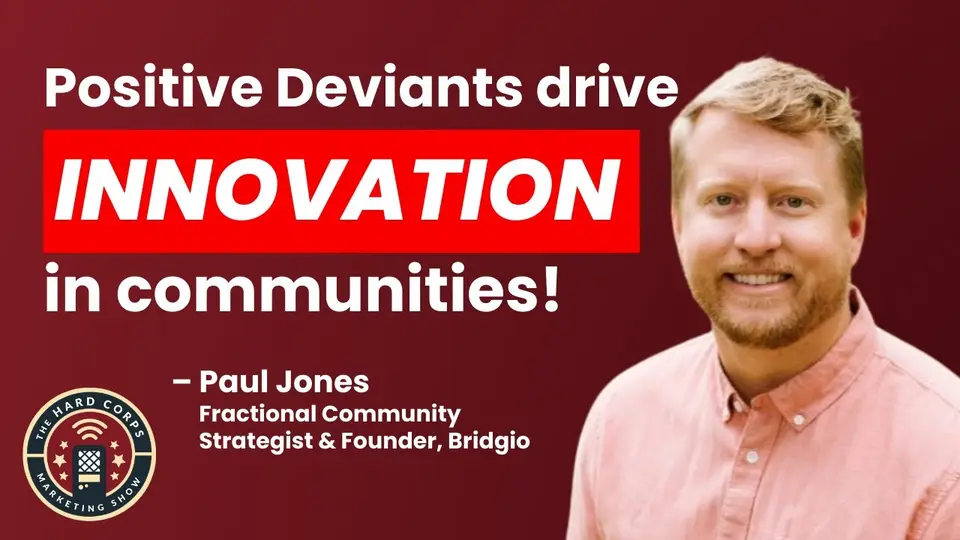
Paul Jones with Casey Cheshire
Traditional paid and campaign-led marketing loses strength when it does not create an ongoing customer relationship.
A community works when it solves participant problems instead of treating attendance as a lead capture event.
Belonging is designed through relevant people, shared challenges and repeated useful interactions.
Customer pain points become easier to understand when a company listens inside a trusted peer environment.
Press a time to listen from there.
Asked to smash a marketing myth, Paul describes a friend whose online store spends most of its revenue on Meta and Google ads. He then explains how community moved from customer support into marketing.
Casey asks how soon a CMO can get leads from a community. Paul explains why a company should let members criticize its product, and why members must still know what it does.
Paul describes an HR community that taught a client how executives talk about their pain. In another community, customer support executives named employee turnover as their biggest challenge, which reshaped an AI company's pitch.
Casey asks what keeps him coming back to the community sessions Paul runs. Paul says members most often learn they are not alone, then explains connection chemistry and how positive deviants lead to breakthroughs.
Casey says people ask him which app the community is on. Paul recommends Priya Parker's The Art of Gathering, talks about planning for chance meetings and recalls a silent Discord and an overwhelming Slack.
Casey asks about Paul's early days. Paul recalls a childhood basketball game where no ticket buyer showed up, and the 30-minute dance parties he threw in college.
Casey asks how Paul works with clients. Paul runs the events on the client's behalf so the client keeps the social capital, then says he would tell his younger self: do it and pivot.
Transcribed from the episode audio, with speaker names added. Sponsor messages are left out.
Casey Cheshire
Oh, yes. This is the Hard Corps Marketing Show. I'm Casey Cheshire, your host for this epic journey.
Oh, yes. Here we freaking go. I am so excited to share and introduce my guest with you today. It is not every day that I can bring someone on here that I have actually worked with. I've, like, I've observed and just been in awe.
Okay. There are communities, right? There are communities. We've talked a lot about them, all the different last episodes, all about communities. It's the word. We hear about it.
You know what? I've joined a bunch of them. I've joined, I don't know, 20 of them. And I've never consistently gone to them. I've never consistently stayed a member, participated, except for one. And it's the one that has been created and curated by my guest today.
If that doesn't tell you something, like, maybe we're going to open up his brain, too. And we're going to dive in and get in there. And we're going to learn what makes for a good community. And I'll foreshadow already right up front a lot of what you think about communities wrong. And I can't wait for our guest to smash some of that today.
But who is he? Who is he? Serial entrepreneur, marketing leader, thought leader, community builder, and strategist, serial founder, serial, many companies, sold, many of them, mentor. Again, community wizard is my word, wizard like Gandalf, but of communities.
You know what? He's also a river guide. So over 40 communities, he's launched over 40 communities, even sold some. That's how you know he's creating value. Founder of Bridgio and a fractional community strategist, Paul Jones. Welcome to the show, sir.
Paul Jones
Wow. Thank you, Casey. That was the best intro I've ever heard for myself. And now I have to live up to that. So thank you.
Casey Cheshire
Well, it's all downhill from there, right? Like, hop on the raft and boat away, man. Dude, I'm excited to have you on here. So I'm going to pass you this thing. It's heavy, but I know you can handle it because, you know, it's like, it's like lighter than a paddle.
Paul Jones
Okay. I'm ready.
Casey Cheshire
Yep. All right. Okay. Here it is. The hammer. The hammer. All right. Take that. Go ahead. Grab it. You got it.
Paul Jones
Okay. Oh yeah. Yeah. I got it.
Casey Cheshire
Oh yeah. Nice. One-handed grab of Thor's hammer. Let's go. This is how, you know, power is about to go down. All right. Paul, take for me, Thor's hammer, smash some kind of marketing myth, bogus strategy, misconception, set the record straight once and for all.
Paul Jones
Oh man. Okay. All right. All right. I have to start with the story.
Casey Cheshire
Yes.
Paul Jones
So, and this will, this will frame it up a little bit. I am doing, I'm, I'm doing this challenge, this, this elevation hiking challenge with a friend of mine and we're just hiking up, you know, the side of the ski slopes in the fall and he's talking about his ecom business and he had started an ecom business many, many years ago. And, um, he, I had come up with a few ideas for a couple of products that I always go to him and I'm like, hey, is this product, does that have enough, um, margin in it to actually get to market and, and, you know, run ads and like get, you know, traction in the market? And I was always blown away with no, no, you're going to have to charge so much more for that product just to pay for the advertising.
And so he was telling me a little bit about this, that he spends on Meta and on Google, and he was formerly an advertising executive, uh, for, for an advertising firm. And he's spending majority of his revenue in marketing efforts. And we're just, you know, we're hiking up this thing.
And, and the entire time I'm thinking, this is insane. Like, who do you work for? Are you working for yourself? Are you working for Google and Meta, when you're giving up over 50, 60% of your margin to them, just so that you can get a customer? That's insane.
So the myth that I'm trying to, the myth that I'm going to bust right here, right now, is that you are spending more on marketing than you have ever spent. And you're getting less from it than you've ever gotten. So marketing is dying in its current form. Marketing is dying. It's not working anymore.
And how long are we going to give these insane, because, because what? We can't find the customer. Like we're so afraid of finding the customer. We're going to pay a premium on these platforms to go find these customers. And there's so much there, I just feel like there's so much at play here.
So look at, look at marketing. Here's some other, you know, food for thought.
Casey Cheshire
Yeah.
Paul Jones
On, in the executive suite, marketers, CMO, lowest tenure in the executive suite. So they turn over the most. So you've got that. Then you've got CRMs now dominate how you're interacting with your potential customer, which is great. Awesome. You can utilize CRMs to engage your customer.
But the drawback to that is that CRMs force you to operate inside a certain box. Like the order of operations for everybody else is the same. So unbeknownst to you, while you're trying to differentiate yourself, you're actually not differentiating yourself because you're following the same order of operations that everybody else is following. And therefore, that's leading to lower conversion rates. So we're just seeing significant lower conversion rates.
But people are so desperate that they're doubling down on the spend. So right now, it is prime for new acquisition, revenue acquisition models. And that's what everyone's looking for.
A couple of years ago, one of the communities that I created was a community of CMOs. And I asked them, what's the future of marketing? And they all said community. And what was interesting to me is a year before that, I had sold a community of community managers. And so I knew the voice of the community manager really well.
And to give you a quick history on that, community management, or the word community got really big because companies were, they started these communities not as a marketing play in the beginning. They started these communities as support deflection. So when you look at a business, your biggest hit to COGS is going to be your customer support or client success function. So, you know, businesses were looking for ways to make that more efficient. And so they started a community where, you know, customers could go and get help from other customers. And that takes away time from their paid employees, which they don't have to grow, et cetera.
So that's where community started. And then two years ago, it started to make this transition over into sales and marketing. And that was the biggest struggle that community managers were struggling with was, we want to show ROI. We want to be able to get new clients and new customers. But marketers were looking at community going. Oh, I didn't tell you what happened. I asked them what the future of marketing was, and they all said community.
Casey Cheshire
Yeah.
Paul Jones
But I knew that they didn't know what they were talking about because all the community managers that were reporting to CMOs hated it. Because, yeah, because the community, because the marketers were looking at the community as MQLs. And they wanted to get MQLs out of those communities. But the community managers going, no, this isn't a churn and burn approach to community. Community is more like a garden. You have to grow it and you have to give it time and et cetera, et cetera.
And so they, most of the community managers that are reporting to, and it's probably still true today. This was a year ago. I would guess it's still true today. If you have a community manager that's reporting to you and you're a CMO, they probably hate reporting to you because you don't get communities.
Casey Cheshire
Really?
Paul Jones
Yeah. I mean, that was, I had so many conversations. You're either going to, if you're a community manager, you're either going to be on the client success support side or you're going to be on the marketing side. And there's so much that's happening on the, you know, new customer acquisition side, go-to-market side of things, that it's all relatively new. And so there's a lot of challenges with that.
Casey Cheshire
Man, you know, shots fired, it is broken, it is disconnected, and community is the answer. Everyone sees it, but they're just executing it so wrong.
So how do you balance? It's almost like, you know, when the ocean meets the river, right? It's my favorite. It's like, when those two things meet, I need the MQLs. I'm the CMO. I don't want to get fired.
Paul Jones
Right.
Casey Cheshire
And I want to grow this garden, but I got to harvest some flowers for my wife. So like, how soon can you get me some flowers?
Paul Jones
Yeah, yeah. Well, think back to this. Like, and this is why I think marketing has kind of gotten out of control.
Casey Cheshire
Yeah.
Paul Jones
Is because what was marketing originally? It was brand awareness.
Casey Cheshire
Yeah.
Paul Jones
And that's always hard to get an ROI on, right?
Casey Cheshire
Sure.
Paul Jones
With modern day CRMs, and again, this is going back to the benefit of having a CRM system. There are ways, there are unique ways to create attribution from a community, you know, a touch point or something like that. So you have that element to it, but community in a lot of ways is, is more so awareness, I would say than, than anything else. Now people do some unique things to, to, to create those MQLs, but you can't go to a community for the sake of getting that, get, getting those flowers, um, because you're just going to, you're going to stifle the growth or, or people are going to become distrustworthy.
There's so many cool things. Like, for example, this is, this is such a great example, a lot of companies. So everyone's diving into community right now. Everyone's like, yeah, we got to have a community. And, um, what people are doing, what, what, what's interesting, all the cool stories that come out of real communities is when companies started their customer communities and their customers hated the product. And they talked about how much they hated the product.
Now a company is going to do one of two things in that scenario. One, they're going to shut down that channel and they're going to delete the comments. And guess who's saying that? Marketing saying that, right?
A community manager says, no, we want them to have a conversation. In fact, it shows a lot of trust that they're willing to say that on our, in our space, the space that we created, they're willing to give us that kind of feedback. They're willing to look at us in that way. And they're willing to have that conversation because now it enables us to engage with them at the table and talk with them about that rather than avoid that.
And I think that is another fundamental difference between a community approach and, you know, like a traditional marketing approach is, hey, let's, let's social proof everything that we're doing. We're awesome. And a community is come, you know, come in here. Let's chat about what, what the challenges are. And at the end of the day, when people are following that thread, they will respect you more because they see your dedication to the problem that you're trying to solve or the product that you're selling or whatever it might be.
Casey Cheshire
You know, what a cool topic that has evolved here because I feel a little bit like there's a parallel with podcasts have the same kind of thing, right? You can get business from guests and audience and customers, but it's not one of those things you're, it's not PPC landing page, squeeze page thing. So, so I, so I can't expect roses from the garden, but I have to pay the gardener. And you have to grow the roses in the first place to grow the roses, but, but what's the idea at every now and then people will give me a bouquet that I can get to my wife?
Paul Jones
Well, so, so here's another, I think fundamental difference is true. You know, starting off, let's, let's go 10, 15 years ago.
Casey Cheshire
Sure.
Paul Jones
What's the whole marketing motion? And the whole marketing motion is who's your persona and what's the pain that you solve?
Casey Cheshire
Yep.
Paul Jones
Well, the thing about a persona is, you know, you might find, uh, you might find that they have a pain along a journey. You might find that they have a pain as they grow to a certain place or whatever it might be. Like that's such a, um, myopic way of looking at that persona, right?
So then what, what we do in marketing is we say, okay, we are going to broadcast the pain solution to everybody. And I feel like everyone's got that play down. This is outbound. This is inbound. This is, everyone's got this play down, right?
But the community approach to this is it's more holistic. So, so you might have a solution that you solve for, um, a particular pain that you, that you solve for. But the problem is, is that your persona has an entire, you know, history or, or an entire presence of problems that they're dealing with at any given time.
And so this is where I think actually community and, and marketing are going to create, are inter, intertwined to create a really strong rope is because now what you say as a brand is you're saying, you know what? Yeah, we solve this pain for you as a persona, but we are more invested than that in you as a persona. We want to help you with all your problems and we don't care necessarily where you get those solutions. We just want to invest in knowing you, knowing your challenges, building the relationship with you.
It's like, um, I forget the book, but I went into Apple. This was a couple of years ago.
Casey Cheshire
Yeah.
Paul Jones
I had a, uh, what was it? I, I had some problem. I think I had a crack. I think it was a crack screen or something. And I, I met with.
Casey Cheshire
No, those things don't ever crack. No. Yeah. They don't break. Get out of here.
Paul Jones
Um, it wasn't, it was something else. Anyway, I had a problem. I was at the Genius Bar. Uh, the woman diagnosed my problem and, uh, she told me what the price was going to be to fix it with Apple.
And I was, I was like, wow, that is so expensive. And then she kind of like, you know, whispered and she's like, yeah, but if you go down here, I think you could probably get it for half. I'm like, thank you. So I went to their potential competitor, but where does my loyalty stay? My loyalty actually stays with Apple and the Genius Bar because now they're a trusted resource for me. 'Cause they're going to send me to the right place.
Casey Cheshire
So classic Macy's.
Paul Jones
Yeah. Yeah. So I think that, um, one of the things, one of the things that's on the edge right now is to your point, Casey, is you have this garden and this garden of roses. And when the rose blooms, you want to be able to harvest that. So that, that would be in the form of pain. When, when pain happens, you want people to know what you do.
So let me juxtapose that to this. I built another community and we had built it with this client for two years and they, they were all in on that. We don't sell. We bring you in to have these types of conversations, blah, blah, blah. Two years in some of the longstanding members approached us and said, hey, by the way, we love what you're doing here, but we're a little confused because we don't know what you do.
Casey Cheshire
Yeah.
Paul Jones
So when the rose blooms, there's no one there that's going to, you know, snip it and take it away. Um, and so part of that is you have to do it in a delicate way, but you, you have to, people have to know what it is that you do. And, and that goes back to original marketing brand awareness or whatever that might be. So you do still have to have that presence. And that's what I think helps you get that bouquet at the end.
Casey Cheshire
Okay. Yeah. And that, that makes sense. Um, there's definitely a bit of delayed gratification in that it's not the instant marketing that, you know what? Hey, we're in B2B for a reason, right? I think sometimes it's, you know, it's trying to operate a B2B world, like a B2C marketer, like, yeah, buy my a hundred thousand dollar thing tomorrow. Not going to happen, man.
You got to, you got to nurture this thing. And you know, the, in the bigger, the deal size, the more important that community is that you, you don't mess with it, right? You don't go try to pick things early. You just got to let them grow.
Paul Jones
Yeah. Yeah. And, and you, you want to get good at identifying. So one of the, and this is going to differ from, you know, community is a whole industry and it's, it's its own thing. And people do it for a lot of different reasons. When I approach community, I want to create a community of pain. It goes back to the Sandler selling method.
Like you, you can't sell anyone until you know what their pain is, but you have to recognize that people in your community are going to have all kinds of different pains. And so you want to be able to provide a space where they can get valuable solutions, whether it's your solution or not. So at some point, your solution is going to overlap with someone's pain. So this is like just staying ever present with your persona.
And the other thing that I would point out too, that's come out that I've noticed over time with communities is, uh, this is another example. I built another, I built a community for a client. They had their website, they had their value proposition. They thought it was right. And we always think our value proposition is right. The reality is, is that we're constantly tweaking and changing them all the time.
And so when you create a community where pain is discussed, then you get to learn how they speak about it. They get to learn about how they think about it. Like that's invaluable. That's going to save you money and, and time down the road.
So, uh, case in point, this, this HR community that I built, we were tracking all the challenges that HR executives were having over six, seven, eight months.
Casey Cheshire
Yeah.
Paul Jones
And what we realized, this is, this, this actually happens often in the communities that I built, but what we realized is that the way they were talking about the pain is not the way that exactly the HR executives were talking about the pain. Here, here's another one for you. This one was really fun.
So customer support executives, we're asking them, what are your biggest challenges? What are your biggest challenges? And their biggest challenge consistently was employee turnover.
Casey Cheshire
Yep.
Paul Jones
My employee. And then second was my CS reps hate answering the same question over and over again. Well, this was an AI company and, and initially their value prop was, hey, implement AI, save time, save money, and you don't need to scale your CS customer support as big.
Casey Cheshire
Right.
Paul Jones
But after we looked at that, all of a sudden we were like, oh wow, actually implement AI so that AI can take over all the questions that your, your reps hate answering over and over again so that they can deal with more nuanced, challenging problems that they like to solve, which is going to help you career path them even better.
Casey Cheshire
And prevent that turnover.
Paul Jones
Yeah. And prevent employee turnover.
Casey Cheshire
Yeah, exactly. Yeah. I see full, full, full circle on that. And so the element of discovery, I mean, so many times on this pod people are, and I've even said this, like we, we don't know the answer to that. So we, we hallucinate like AI, we make up our own answer based on our own bias.
Paul Jones
Right.
Casey Cheshire
So even worse than even just using the wrong words, we're just, we think it's some other problem and it's nothing to do with that problem whatsoever because we haven't actually asked.
Paul Jones
Yeah.
Casey Cheshire
And maybe we get kind of shy. We get marketing shy, hashtag, and we don't want to ask them these questions, you know, but this is a great method for discovery too.
Paul Jones
Yeah. I think that's, that's probably the biggest advantage is discovery.
Casey Cheshire
Yeah. And actually knowing what the deal is, the ongoing relationship. Tell you what, man, like I, like the community that I've, I've been a part of, uh, that you created, uh, that's how we met, you know, was through this community. It would be one of those, and I've always explained it to people because they can relate to this, you know, it's on the calendar and I go, yeah, you know, if something really important steps on that, I'll, you know, I'll, I'll, I'll join that. But man, if nothing's there, I'll join. And I usually kind of like, like a student, you know, like a, like a kid, I'm like, oh, do I want to, am I going to get value?
And I inevitably every single time I go, I leave going, yeah, I met some really cool people. We connected a bunch on LinkedIn and we're going to have some follow-up conversations. And I learned a couple of takeaways and I had fun, you know, every time. And then eventually once that kept happening, now I'm just like, okay, well that I should go like, let's not miss that. Let's not plan that. Or if I'm traveling, how can I still make that call?
You know, she somehow the recipe there, like what, what is happening when I just described all that? What, what do you hear from like the community manager perspective?
Paul Jones
Um, you know, what's when, when we ask our participants, our community participants, what's your biggest takeaway? And this, it's probably not going to be surprising to you, but it's going to be maybe a little bit surprising. Uh, the biggest, and a lot of people probably wouldn't admit it, but, um, the biggest takeaway that we see consistently across all of them is I, I, I realized I'm not alone.
Not from, um, I need friends, but from, I thought that the problems I was dealing with were just problems that I was dealing with. I didn't realize that other, you know, whatever, uh, other people like me are having these exact same questions and are having these exact same challenges.
And so, uh, one of the terms that I love about communities, and I don't know, you'll have to validate this on your side from your experience, because by the way, everybody, Casey is, you get him in your community and he is the ringmaster. Like he is the hype man. Like I should actually just pay you to, to join our communities. You need a good sidekick like Casey in your community.
Casey Cheshire
Dude, I need a side job too. That sounds great.
Paul Jones
You know, you come in there and you're like, oh yeah, this is awesome. Oh, my group is the best. Like you're just, you are the breakout group. Oh, breakout group 11 was the best. Oh, Doyle rules.
Yeah. It's awesome, dude. I love it. You bring such a cool energy, uh, to our, to our calls.
Casey Cheshire
Um, but when you were managing it, you put up with it too. That was one of the things that impressed me.
Paul Jones
Right.
Casey Cheshire
'Cause there's a little trolling involved sometimes and you just like roll with it. And you were like, cool. Hey, shout out to Casey, putting a ridiculous joke in the chat, you know, like whatever. It was just, you, you wrangled it in. It was awesome. And some people get uncomfortable with that.
Paul Jones
That, that's probably one of the biggest challenges is if you think about it, I like to call what I do webinots because it's the exact opposite of a webinar and a webinar is really well planned. Like depending on who you are and, and I'm not this person necessarily. I like to just kind of go with it and you know, whatever happens. And there's pros and cons to that. Trust me.
But, um, with, with a webinar, you're planning your topics, your topics lead from one to the other, but with, uh, with, with our, you know, community event approach, every persona. And this is what's fun. Actually, every persona is different. Some, some personas. And I learned this with, with river guiding, and I learned this as a waiter in, uh, in, at, at the Grand Canyon is you have to be able to read the people you're interacting with.
And I'm not saying I'm the best at this, but there's definitely what's going to happen on a, on a call like that, where people are coming to interact with other people is that culture is just like going to form, it's going to be there. And you are a big part of that in terms of how you're going to do this. So you can stay rigid and not let that kind of form, or you can try to embrace it and, and wrangle it to some degree and then let that kind of play out. But every, it's, it's really interesting. Every, every persona is, is different and that's what makes it kind of fun. And you don't nail it every time, but.
Casey Cheshire
Yeah. Do they, they all interact different ways?
Paul Jones
Yeah. Different.
Casey Cheshire
Yeah. Yeah. And you know, little, little, little fractional, little marketing leadership, you know, community. We, we get a little, we'll get a little fun in there.
Paul Jones
Yeah. Yeah. For sure. We're a little rowdy.
Casey Cheshire
A little rowdy. Yeah. A little rowdy.
So, okay. So, you know, one of the things you had mentioned earlier, the idea that it feels good to have other people just even at a minimum in the same room, maybe a breakout. And you, you hear that they had the same problem or challenge that you had or have, and you're like, I'm just not alone. But I, the dot, dot, dot I took from that was then I, I need to make sure I have people in the community that do have the ability to potentially have the same problem. And it's like, I need to have some of the same people in there. And not just add everyone in that, that idea of that catch-all community.
Paul Jones
Yeah.
Casey Cheshire
How do you balance that out? How do you let enough people in, but not too many of the wrong people?
Paul Jones
Okay. This might sound a little bit too far out, uh, but this is kind of how I think about it. So I think about, um, what, what I noticed in doing this is sometimes you can put people into a breakout room and you never do more than five, but sometimes you can put people into a breakout room and they are just going to boom. Like they're just going to, the chemistry is there and they're, they're going to immediately. It's all about feeling seen, heard, and respected.
Oh, okay. I understand who Casey is. Casey understands who I am. Now we can, we can chat with each other about these common issues.
Casey Cheshire
Right.
Paul Jones
So, um, it's connection chemistry that you have to think of it that way. So the reason why I, I anchor on chemistry is because when you, so you've got in chemistry, you've got the noble gases, like, okay. CO2, carbon and oxygen are always going to be attracted to each other. You put them in a space together. What happens? Carbon dioxide, CO2, right?
Casey Cheshire
H2O.
Paul Jones
Right. So, so when you're building these types of communities, you have to think exactly what you said. You have to think from a perspective of if I'm getting these people together, is there enough, um, shared challenges that they're going to be able to immediately start to talk.
And the other thing that I think is really fun about this community approach is something called positive deviance. So, and positive deviance lead to breakthroughs.
Casey Cheshire
So it sounds like me, positive deviant.
Paul Jones
You're a total positive deviant.
Casey Cheshire
Let's go. Yeah, totally.
Paul Jones
So positive deviant is someone that's doing something different from others, but getting positive results. So when you, and a lot of people join the communities to, to understand what best practices are. But additionally, if you can really get good conversation, you're going to uncover these positive deviant behaviors of ways that people are solving problems that you didn't even think about, or even a unique point of view that you didn't even think about. So, you know, think about fractional, you're all of the fractional executive meetings that you've been to. I don't know if you've had any, or have uncovered any positive deviance.
That's always what I think about. That's where I spend all my time is how do I get more of positive deviant surfacing, like the, like the cream on top? Like how, how do I get more of that? Because once that rises up to the top, now we can broadcast that innovation across the board. And that, that becomes the rising tide that lifts all boats in a lot of ways.
Casey Cheshire
Right.
Paul Jones
There's some ways that there are some things that potentially can happen that stop that cream from rising. One of those being if, if everyone in the group views each other as competitors, or they're holding their cards close to the chest. And so you have to design a space where that doesn't, I don't know if you'll ever completely get eliminated, but it gets, you mitigate that. And you make it such that you, you create a space where people feel like they can open up. And when they feel like they can open up, then they're not going to feel alone. Then you're going to get a positive deviant, uh, perspectives, positive deviant result, like actions, all sorts of stuff.
And so you might not get a breakthrough every time you interact with that community, but you will get a breakthrough enough. And it's, and it's, and it's on, uh, so I, I come from a behaviorist background, right? So, so the best way, think about slot machines, slot machines. You don't know when you're going to get the reward.
Casey Cheshire
No idea.
Paul Jones
No idea. But, and, and that's what makes it very, very appealing. So in a lot of ways, if you can design your community around that, being able to access a new point of view, being able to access a new perspective, being able to, um, meet a new person that you really like, those are all dopamine, um, hits that, that come to you that create breakthrough moments that are going to progress your career. They're going to progress your mindset, whatever it might be. They're going to help you move forward.
Casey Cheshire
You know, I definitely, as you mentioned that topic, my brain immediately went, I know for sure. I was, I've shared some of those with people in the breakouts. Breakouts have been the magic and small group. We can all chat quick introductions, but then we're just sharing some things and, and yeah, this is where I've always been surprised and intrigued.
I've shared things and I've seen people light up and go, oh, I could, so I know I'm creating some, but I definitely remember having several aha moments where, you know, just hearing how people were either doing meetings or how they were grinding. Um, you know what? It was actually on one of those meetings where someone shared this thing where they were connecting with 30 people, um, 30 people a week. And that was like their, their discipline, their weekly discipline.
And it's like, and now it's so ingrained in my own discipline, my own structure to reach out to 30 people a week that I almost don't even, didn't until today, just remember, where did that come from? It came from one of those breakouts where someone just casually shared, like, they just, they do this thing. I thought, man, that's so aggressive, but I love it. And I wonder if I could do that. And yeah, you can.
And I would say a lot of my, my success in 2025 has been geared to just a simple takeaway of like, nope, I just set myself a goal of hitting 30 people on LinkedIn every, every week. And then boom, there it is. So like the value from that one little meeting, you know, and then adopting it and executing it was huge.
Paul Jones
Yeah. Oh, that's cool. I love that. Yeah. And that should happen all the time inside a community.
And that's why you should go, you know, it's almost like, um, they always use this example in behavioral economics where you, uh, I don't get this locally, but I wish they did this. Here's your power. And so the, so the power company here, here's your power consumption for the month. Here's how you compare it to your neighbors.
Casey Cheshire
Yeah.
Paul Jones
And they saw power consumption decrease.
Casey Cheshire
Yeah.
Paul Jones
That at the end of the day is a really good example of how community works is you come in and if you can be open, you know, open to receiving some new insights or whatever you might be feeling like, oh yeah, I can do that too. All of a sudden you get these nice benchmarks and all sorts of really fun stuff start to happen.
Casey Cheshire
You know, one of the things I want to take us to is, was something that I feel like we've both taken for granted because I've been attending these things and you are the grand community poobah, which is like when you go, right. Almost like you're going to church or to community when you go.
But I think a lot of times when I talk to people and I, and I, I'm kind of evangelizing a little bit of like the coolness of the communities I've seen with you. They're like, oh cool. What app are you on? As if the primary mechanism of participating is the digital participate. Talk to me about what you've seen there and smash the myths around that.
Paul Jones
Oh man, damn, that is a good question. And I actually think that's where the opportunity is.
Casey Cheshire
Dang dude, that was great.
Paul Jones
Thanks. Well, I'll just end here. You know what, or, you know, to hear the answer to this, you know, hit my paywall and pay the a hundred dollars. No. Okay. Yeah. You get the answer right here.
Casey Cheshire
Let's do it.
Paul Jones
Well, okay. So, um, the, what I immediately thought of, and this is a great book, highly recommend Priya Parker's The Art of Gathering. And she talks in that book, she talks about how event organizers, most, most of us spend too much time thinking about what the table spread looks like. So what is the actual event going to look like? And we don't spend any time thinking about the seating arrangement, the topics to be discussed. Like that's, that's largely neglected in almost any event that I have ever attended.
I remember, um, coming. So, so I was used, I was in the outdoor industry, taking people down the river, smashing them in the face with whitewater. One of my favorite things to do. And then coming into SaaS and went to SaaStr and we're all listening to the CEO of Zoom talk about, you know, how he raised money and put it all in the bank and, and blah, blah, blah.
But the funny thing is, is we were all, all of us were, were, were startup, you know, in startups trying to make our way in the world. And the irony is that we're all sitting next to each other. Look, listening to one person speak when the value is in the people to my left and to my right.
But when you go to those networking events or when you go to any of, uh, any of those events, like, yeah, it's, it's, it looks cool. It's awesome. It's great. Uh, it's a lot of pizzazz to it, but there's not a lot of intention in, okay, how am I going to get these people to, to have a meaningful conversation?
And that's what needs to change digitally. So everyone's thinking, oh, what are you on? What are you on? But they're not thinking about how am I creating interconnection with people? How do I do that?
Um, what, what are, what are the conversation topics? What are, what are the programs? Um, how do I arrange seating? How do I create, uh, serendipitous moments? Like that's another thing is architect, architecting serendipity. How do I create opportunities where two people can have a serendipitous moment together?
And we are so like, from an innovation standpoint, we are lacking significantly there. And that is also why I think the loneliness epidemic, uh, the departing Surgeon General, 30-something page report, he said, the biggest problem we have is loneliness in this country.
Casey Cheshire
Wow.
Paul Jones
So how do we solve that problem? Well, we have to start thinking more intentionally about, all right, well, let's not just uncover this, this, this solution and sell this solution, but how do we have better presence with the people that we care to be around?
Casey Cheshire
Yeah. Wow. It's not, it's not more drugs. It's probably not a SaaS app.
Paul Jones
It could be both of those combined. And then that creates a great community.
Casey Cheshire
A pretty wired one, right? As I drink myself. It's probably, um, it, and I, I think sometimes people don't realize that, yeah, I wrote down, you know, architecting serendipity might be a cool book we should co-write together, but like, that'd be fun.
But I think people don't understand that you can actually create moments. Like you're doing that with the community. You're being intentional about creating those moments that feel like serendipity with the sock or whatever. By the way, that movie is stupid. It's not realistic. My wife loves it, but I hate it.
Paul Jones
Wait, wait, wait, wait. What movie is this?
Casey Cheshire
Serendipity. Did you see that movie?
Paul Jones
No, I haven't.
Casey Cheshire
Bro, that's your homework.
Paul Jones
What does a sock have to do? I bought his book and then you can, okay, um, Serendipity in the movie, explain it.
Casey Cheshire
This, this guy and this girl meet like four or five times and he's like, oh, what's your number? He's like, she's like, I won't give you my number, but if we ever meet again, that means it's fate. And then I'll give you my number maybe. And then they happen to meet again, like three or four to five times in New York, which is impossible.
Uh, and eventually does he get a spoiler? I don't know. I can't spoil it for you. Does he get her number or not? I don't know.
Paul Jones
I have to watch it this weekend. Okay. It's on the list.
Casey Cheshire
But you're architecting it, right? Not just like it, it just happened. Okay. Well, how can we make this more likely to happen than not? So what are the, some of the things that, that you do when you're planning these communities and maybe the different things that go on in these conversations, right? And these are like conversations with people. These are like meetings, right?
Not, this is not talking about that. The prioritization of the in-person experience over necessarily the technical, you know, like I even asked you the other day, like, hey, well, what platform should we get? And you're like, hold off.
Paul Jones
I think, well, so, so are you talking about live, live events versus digital events or live events versus not live events whatsoever?
Casey Cheshire
Just like, let's be all together on a Slack.
Paul Jones
Yeah. Yeah. Yeah. Okay. Okay.
Casey Cheshire
Like, I think in my mind, in a lot of people's minds, they, when I say, oh, the community, oh, you're going to make a Slack channel.
Paul Jones
Yeah.
Casey Cheshire
Right. Yeah. That's what a community is. Right.
Paul Jones
And, and it's so much, so much more than that. So it's actually really fun. It's really, really fun.
So I come from, uh, well, I outdoor, and then I moved into tech and, and, um, I actually even tried to build my own, lot of failures along the way, but tried to build my own tech platform that was based on connection. And there's some rules that govern how you go to market or how you build technology that people are going to use. Um, Lean Startup by Eric Ries is the most probably widely known book around that.
Casey Cheshire
Yeah. Totally.
Paul Jones
And so when I started getting into community years in, I began to, you know, the first time we were building these, these virtual, you know, gathering communities, and then we would always hear, I want a platform that would help us stay connected in between events.
Casey Cheshire
Right.
Paul Jones
So I was, so then I'd like, oh, okay, well, we're going to ask the people what they want, and then we're going to give them what they want. Like that sounds so simple. And it's not.
So, so we asked them, what do you want? Oh, we want to stay in touch in between events. Okay. How do you want us to do that? Oh, Slack. Okay. We'll set up a Slack channel. Crickets.
Oh, okay. What next community? We want to stay in touch in between events. What should we do? Well, what platform should we use? Oh, let's do Discord. Okay. Set up Discord. Nothing.
Casey Cheshire
Right.
Paul Jones
So it's not like building, even if you're building Slack, whatever it is, it, it actually, what you're using doesn't matter. It's, it's how you go about building it. You have to build it very carefully using the same principles that Eric Ries talks about in his book.
You don't just, the first time I ever built a Slack community, I just created, I was like, oh, this would be fun to have this channel. And this would be fun to have this channel. And people came in and there was like 10 channels and there were like, you know, 50 people. And it, it was too overwhelming for them. So there's a whole science to going about building these traditional communities that we think about Slack communities, Discord, whatever it might be.
But I think at the end of the day, people want to go to a place, it's Cheers. I want to go, you could probably sing that song, but yeah.
Casey Cheshire
We want to go to, everybody knows your name.
Paul Jones
Yeah. Well, you want to go to a place where everybody knows your name.
Casey Cheshire
Yeah.
Paul Jones
And, and you, what that means is not necessarily everyone knows, you know, Casey Cheshire, but they see you and they recognize that you're similar to them and that what you have to share is going to be valuable to those other folks.
Casey Cheshire
Yeah.
Paul Jones
So, so it's, it's the intersection of the persona that you really have to nail. It's, it's a lot of the same basic stuff is you've got to really figure out, narrow down who your persona is. And then if you do a good job bringing them into the space where you architect serendipity, just watch the molecule, just watch the molecules just combine. It's just super fun.
Casey Cheshire
Oh man.
Paul Jones
But it's, it's, um, we don't nail it every time, you know, most of the time we haven't nailed it, I'd say. Um, and we're, that's what we're constantly trying to optimize is if we create, oh, I was going to tell you, this is, this is what we hear a lot. And I think this is awesome.
When I put people into breakout rooms, I, I can't, there's too many people. I can't predict who's going to be there a lot of the times, but all the time I will get feedback.
Um, those people in my breakout rooms, like I needed to hear what they had to say today. They were struggling with the same thing I was struggling with. And if I hadn't been in our breakout room today, I wouldn't have gotten X, X, and X. How did, how did you assign me to those people? 'Cause that's exactly who I needed.
And my answer was always very carefully. But the reality was it was random. It was Zoom random.
Casey Cheshire
Yeah.
Paul Jones
But if you do the work to, to bring the right people there, it, it doesn't matter. You know, because they're going to find if they feel seen, heard, and respected, they're going to lead themselves to those insights.
Casey Cheshire
Yeah. Dang. Dang. Dude. I could talk to you about community all freaking day, but I can't. Maybe we'll have, you know what? We're even going to create a new podcast just so we can talk to you all day about community. Uh, stay tuned, stay tuned for that, y'all.
Uh, but in the meantime, I want to transition a little bit because you know, all of these things and you've let us know that you have been that cool guy on the back of the raft doing your thing. So I just got to ask like, who are you? Who are you? Take me back in time. Little Paul days. Did you know you're going to be the community, absolute wizard, absolute strategist?
Paul Jones
Oh my gosh.
Casey Cheshire
To the stars, you know, and, and all of these things. Like, what was it like? Little Paul days.
Paul Jones
All right. I'm eight years old and I'm playing Junior Jazz basketball and, um, we had just got our basketball court installed in the back of our house and I thought, oh, you know, what'd be so cool is let's make a basketball game. So I didn't have a, I didn't have any teams. I just created this little banner and I said, um, it had tickets on the bottom and tickets were 50 cents.
And I walked door to door and I just told people like, hey, there's going to be a basketball game in our house and tickets are 50 cents. Uh, do you want to buy one? And people, we sold out like people bought them. I think we were expecting, I was expecting this is north of 50 people there. So then all of a sudden I'm like, oh, I got to get chairs. I got to do all this thing.
So I, I, I had my basketball court set up. I tried to recruit the neighbor kids, but the neighbor kids didn't want to play basketball in front of the other neighbor's parents. And so at the end of the day, it was just me and three other people. And we were going to play this basketball game in front of the audience. I went and got chairs. The day, the day came to have the basketball game and nobody showed up that bought tickets.
Casey Cheshire
Dang.
Paul Jones
That was the first time I realized like, what, what? I, I was so confused. Like you bought a ticket, but you're not going to come. He spent the money, but you're not going to come. And that was the first time when I, when I began to realize, oh, this is way harder than it looks.
Casey Cheshire
Right.
Paul Jones
Fast forward to college. Um, we, we started to do, so we would have these parties at our house and, and they were dance parties at the time, uh, EDM or, uh, like dubstep music was really popular and we loved it. And, and, and my roommate was a DJ.
Casey Cheshire
I can see that. You had the long hair.
Paul Jones
Yeah. I had long hair. Yeah. Super long hair.
Casey Cheshire
What's up, man? Dubstep.
Paul Jones
Yeah. Yeah. Yeah. Yeah. Dubstep.
Casey Cheshire
Wow.
Paul Jones
So, um, we would have these, my, my roommate was a DJ and we'd have these parties, um, at our house, but we, we get shut down by the cops, like 45 minutes to an hour in. And so then this was when like flash mobs were just becoming a thing. So then we were like, oh, what if we just did a 30-minute dance party and then shut it down? And by the time the cops come, nobody's there.
And so if you go back to my, my, uh, where I went to college today, they are still doing Dirty Thirties today because they, they became so much fun. Like I remember one time we had so many people in our house that the walls were sweating, like dripping sweat.
Casey Cheshire
Oh no.
Paul Jones
It was crazy. And we went downstairs and the floor was like bouncing up and down. It was crazy. But we would do these really fast, go all in for 30 minutes, uh, these, these dance parties. And again, they're still doing them today. It's super fun.
Um, so that is, I, I, I, who I am, I like to gather people for fun experiences.
Casey Cheshire
Yeah. Dang. Well, it's working. It's working now. And now you are a fractional community leader. You are the king.
Talk, talk to the folks listening. If they're like, you know what, I want, I want some of that magic, I want to help, I want to architect serendipity for my customer base, for my prospects. You, you work with those folks that, you know, should they, how do they contact you? And what kind of things do you set up for them?
Paul Jones
Thanks, man. Uh, well, you can reach out to me on LinkedIn, Paul Jones, uh, Bridgio, and, and happy to have a conversation. Uh, the biggest thing I would say is when we first start going down that road is how well do you know your persona? And is that the persona that you want to be spending most of your energy with? Do you enjoy being around these people?
And if you enjoy, if you really enjoy being around the persona that you're selling to, then I think community is a great spot for you. But if you're looking for a quick win, right, or, or because a lot of the times I'm not, I'm working with the founder or the CEO, uh, because I want them to be spending time. I truly believe that if they're spending time building this asset for their business, they're going to learn the challenges that their persona is facing on a regular basis.
They're going to learn, uh, industry trends. They're going to be able to maintain relationships at scale. They will run better board meetings, better executive meetings, better meetings all around because they're holding close to them that, you know, the, the persona that they're selling to at the end of the day. And so they'll build a better company as a result of that.
But, and so what we do is, is we will, we will do that for you. So, so when I, when I build a community, it's, it's not, it's not Paul's community. It's my client's community. And that's important because we spend, if you think about it, so many people spend so much effort and money accessing other networks that other people have built, but who owns all that social capital and all that social equity? It's the other organization.
So if you invest in building your own, you know, social capital and your own social equity, it, it becomes, you become the primary beneficiary of that network, even though you're providing value to everyone else that's a part of it.
Um, so if, if, if, if you do enjoy your persona, if you still want to, um, learn from them and want to maintain relationships at scale with them, uh, a community approach and my community approach, again, you know, you, you called this out when, when you think about communities, you're thinking about thousands and thousands of people on a Slack channel.
Our approach is, um, our approach is the beginning of, of, of all that grassroots is, is at the very beginning. It's event-based, but we're doing it, um, on behalf of the client. So we'll do all the minutiae work for them. Um, they'll get to show up and, and own the social capital of that. But, but, but because we're, it's a fractional team, we'll do all the behind the curtain work for you.
Casey Cheshire
Which is a lot, which is a lot.
Paul Jones
There's a lot of, a lot of moving parts.
Casey Cheshire
And I know you actually will get people. I mean, look, I work with you. I think you're freaking fantastic. So this turns into a sales pitch.
Paul Jones
Thanks, man.
Casey Cheshire
Who cares? So blame me. But like, I've like, you go out and get the people like you'll go recruit them. Hey, there's this cool community. Come join the fun.
Paul Jones
Well, yeah. On behalf of the client. So, so yeah.
Casey Cheshire
Yeah, yeah, yeah. On behalf of the client. Yeah, yeah. By the way, your team, your team's awesome, by the way. They are, they are spot on.
Paul Jones
Oh, thanks, man.
Casey Cheshire
Yeah. Your team's awesome. You're great.
Paul Jones
Yeah. Awesome. High five.
Casey Cheshire
Yeah. Yeah. All right. So, uh, my next question is a bit of a hypothetical question, if you're ready.
Paul Jones
All right.
Casey Cheshire
You see, I may or may not have a time machine here in New Hampshire. So you come out, you do a little visit, maybe get some East Coast skiing, AKA ice skating.
Paul Jones
That'd be fun.
Casey Cheshire
And we use the time machine, right? You go back in time. You get to meet yourself. Early 20s, right? You get to meet yourself a couple of days after graduating.
You just got out of college. You're free. You're free. And you get to talk to that version of you. What do you say? What kind of advice do you give yourself?
Paul Jones
Good question. Oh, gosh.
Casey Cheshire
Knowing what you know about your own strengths and weaknesses and what did that guy need to hear back then?
Paul Jones
You know, uh, you know that, um, this came out years and years ago, 20, I don't know, 18. That Shia LaBeouf. Do it. Just. Yes. Do it. That's what it was.
Casey Cheshire
Yeah. Do it.
Paul Jones
Do it. And, and pivot. Do it and pivot. Do it and pivot. Do it and pivot. I mean, that's, that's all business is. That's all marketing is. Whatever is, is, is trying something and learning from it.
Like the, the, the business that I, uh, started, um, and ended up selling what I thought it was going to be, isn't what it turned out to be. That was the wild thing. And so just starting was the key, but where it took me was somewhere completely different, I couldn't have predicted. So doing, starting and then just enjoying, just enjoy, just enjoy, enjoy the process because it is a process and there are ups and downs.
Casey Cheshire
Man, but just do it and pivot. Right. But like now here's a, here's the next question. Would, would that version of you have listened to you?
Paul Jones
Yeah, probably.
Casey Cheshire
Oh, sick. I love like, whoa, you're me from the future, man.
Paul Jones
Well, if not, I'd be like, if, if you don't do this, you know, like take a pretty, you're going to suffer like me, you know, something like that, like make, make it, make it Nightmare Before Christmas or something.
Casey Cheshire
Right.
Paul Jones
Would yours, would yours?
Casey Cheshire
Yeah. He would. Yeah. For sure. Uh, but I'd have to, I have to tell myself about seven or eight times, you know, and I'd have, I'd have to schedule like eight emails to come to me and then I'd have, I'd have to talk to use a time machine to talk to four other people and be like, hey, please give Casey this advice. I kind of need to hear it like several times.
And I go, yeah, okay, all right, I'll read that book or I'll do it. Oh, hey, great idea. And I'm not saying it's my idea, but I'll go, oh my gosh, you're that thing that my wife said 12 years ago. Well, 30 people finally said it and now I'm finally going to do it. If I, yeah, if I, if I coordinated enough people around it, I probably would have listened.
And you know what? Everyone should probably listen to their future self. Number one, you'd be so freaked out by it. Number two, they know exactly what you're thinking anyway. So it's the perfect pitch.
Paul Jones
Right.
Casey Cheshire
You go favorite number 20. Dude. Hey, where can people connect with you? They want to reach out.
Paul Jones
Uh, I'd say find me on LinkedIn. Um, we do a lot of LinkedIn lives. Uh, if you want to email me, Paul at bridgio.io, B-R-I-D-G-I-O.io. That's right. Uh, let's start a conversation.
Casey Cheshire
Absolutely, man. Absolutely. Tell him, hey, you heard him on the podcast. You want to make this thing happen, right? I heard there's a, there's a million dollars off that million dollar price tag.
Paul Jones
Oh, you, you heard that, huh? Where'd you hear that?
Casey Cheshire
Yeah. Yeah.
Paul Jones
You just heard that on the streets.
Casey Cheshire
Yeah. I heard that. I don't know. I just, rumor. Billions, billions, not, it's actually not a billion. It's, it's much more affordable.
Definitely reach out to Paul. Get your community going, man. It's podcasting community partnerships. These are, this is the magic.
Paul Jones
Yeah. We didn't even talk about that. The intersection of podcasting community. That, that, that's maybe a part two. That'll be interesting.
Casey Cheshire
Dude. We're totally right. The intersection. Maybe we do that on our, our CTM pod. You know, we get that thing cranking.
We do a little conversation over there and you know what we'll do? We'll put it on this pod too. So you can, you can hear it. If you're listening to this pod, we'll cross, we'll cross-promote those episodes. So everyone can hear that combo.
But yeah, man. Hey, Paul, thank you so much for coming on here. This has been absolutely freaking fantastic. I knew it would be. I've been so stoked the whole day. I'm like, I can't wait for this conversation. And it did not let me down.
Paul Jones
Oh, nice. Thanks. Everyone else has felt the same way, man. But thank you. Thank you, man. Thanks for having me on the show. And thanks for being the best community participant ever in the Fractional Executive Brain Trust.
Casey Cheshire
Well, you are welcome. And I am happy to join those other communities. You can just pay me in beer and wine and I will just show up and I'll be.
Paul Jones
Yeah, yeah. Get on the ski slopes, a little après.
Casey Cheshire
You know what? And I need to get a positive deviants t-shirt that I can wear, you know, and just show up in style, dude.
But those listening, hey, if you learn something and I freaking know you did because I literally have two pages of notes over here, front and back, then share this episode with one person, nine people. Three thousand is cool too. But even one person, right? Who do you know that's been trying all those other techniques? Paul talked about it at the very beginning, right?
If you're doing all that stuff, are you just working for Meta, right? Is your marketing just basically feeding them money? But like, if it's not working, consider that positive deviance. Try something different.
You know the community feels right. It feels natural. Do it up. Share this episode with someone else. Help them out. And with that, Paul, thanks again, sir.
All right, everybody. This has been another crazy, cool, very exciting episode of the Hard Corps Marketing Show. We will see you all next time.
Listen · 32 min No Trade Secrets, Ep 10, Part 2
How to build a community people want to join without turning it into a sales pitch.
With Jarome McKenzie
 Listen · 35 min
The Slow Pitch Sales Podcast, Ep 115
How to move from a trusted relationship to a useful sales conversation without forcing the transition.
With Rob Jager
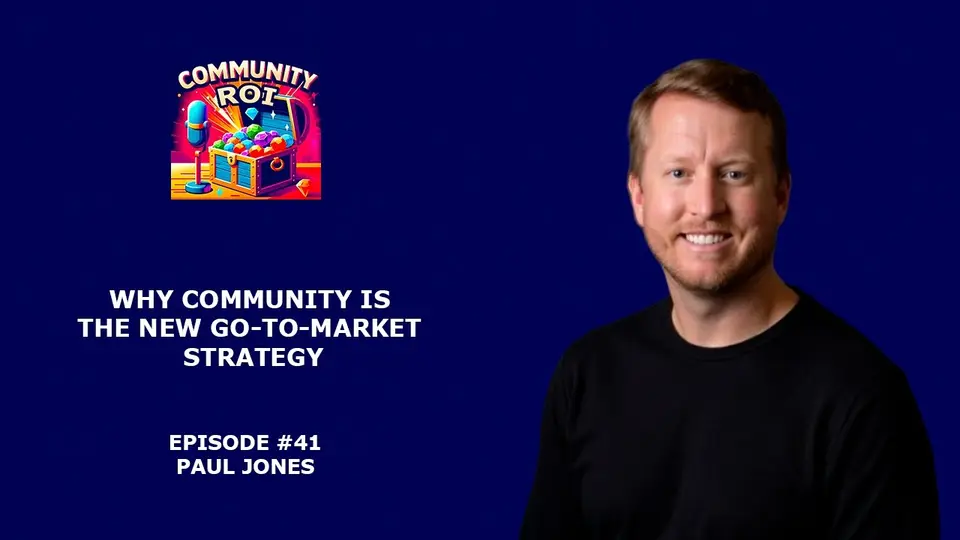 Watch · 42 min
Community ROI
Why community can be the way you go to market instead of an extra programme.
With Yurii Lazaruk
A free 20-minute call.

You'll talk with Paul Jones, Bridgio's founder.